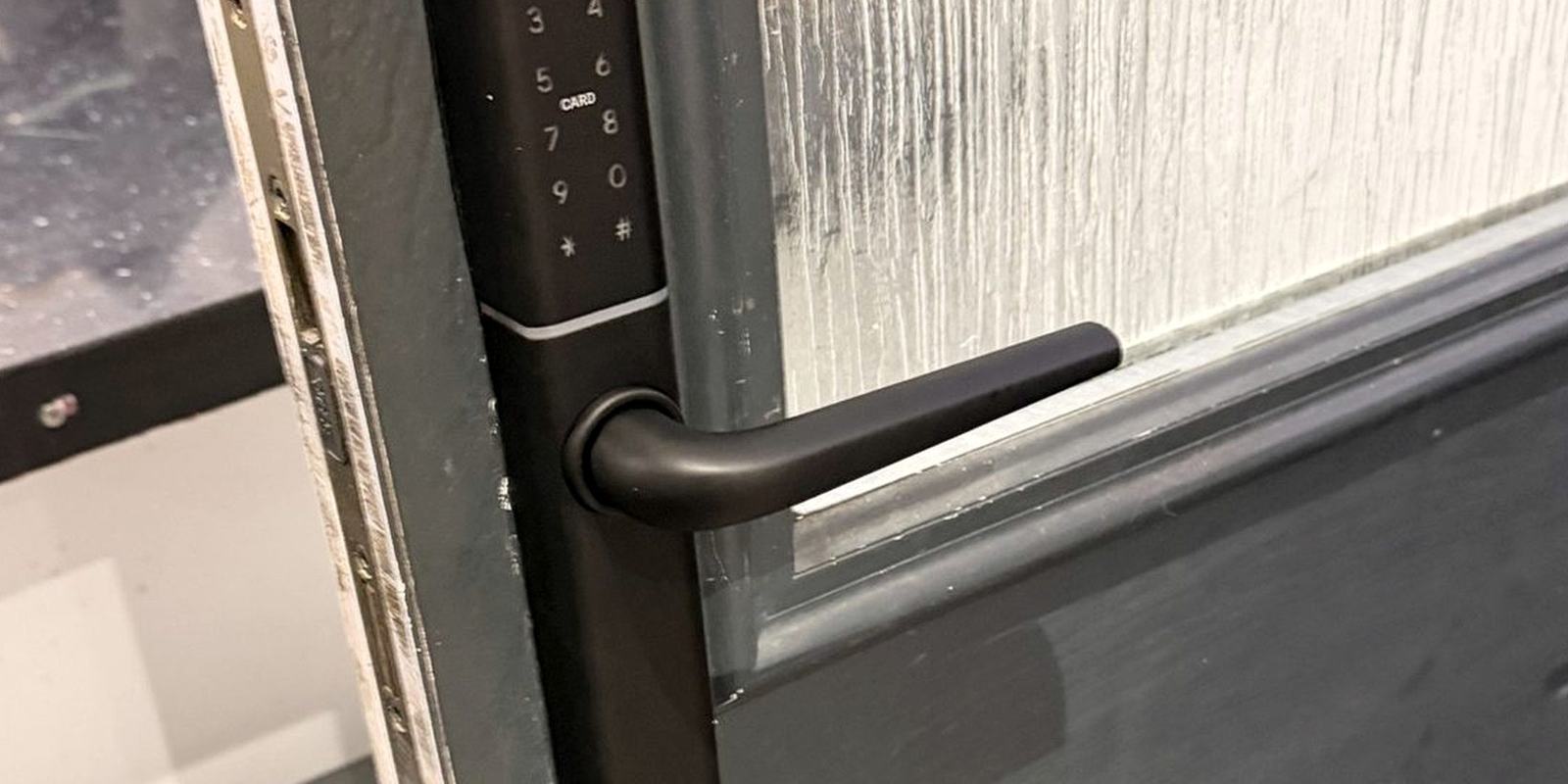
A composite door is a sandwich: a skin of glass-reinforced plastic over a core, which is either timber or a dense foam, inside a frame. It looks like painted timber from the street and behaves more like uPVC where it matters for a lock — the locking itself is the same multipoint strip down the edge, worked by lifting the handle. That is the good news. Most of what can go wrong is in the details.
We recently fitted one to a composite door with a timber core under a thin plastic skin. It went on without drama, and it illustrates most of what follows.
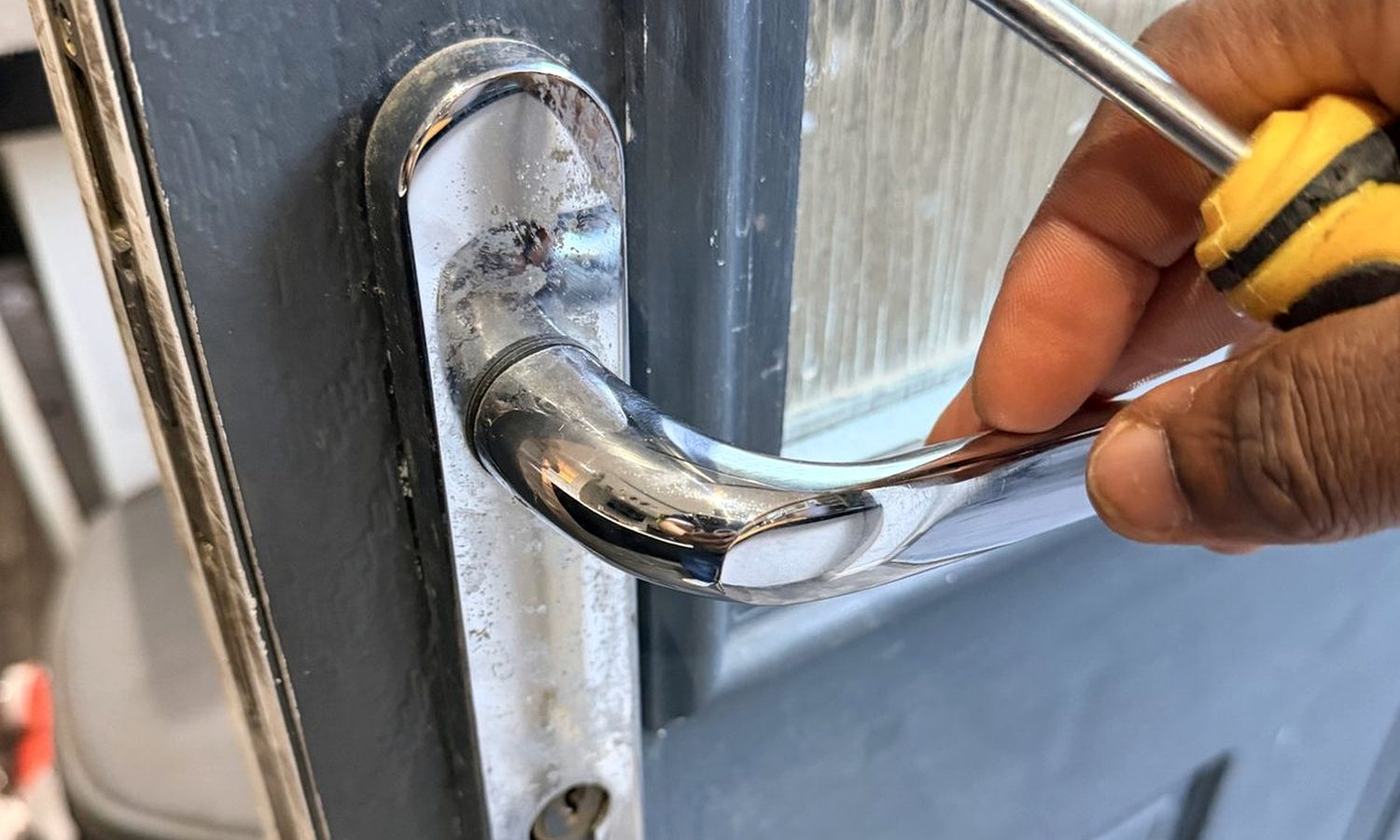
What fits
Because the locking mechanism is the same as a uPVC door's, so is the choice of smart lock. The common routes are a smart handle set that replaces both handles and keeps the door's own mechanism, a full replacement such as Yale's Conexis, which swaps the whole handle set for its own, and a retrofit such as Nuki or Yale's Linus, which fits to the inside and turns the cylinder you already have. With all three you normally still lift the handle to engage the multipoint. Our Conexis comparison and Nuki assessment go into those two in detail.
What does not fit is anything designed for a single deadbolt in a timber door — the kind of smart deadbolt common in American reviews. A composite door has no place to put one without cutting into the skin and core, and it would bypass the multipoint that makes the door secure in the first place.
Measure before you buy
Door thickness. Composite doors are often a little thicker than uPVC ones, commonly somewhere around 44 to 48mm. Smart handle sets and cylinder locks are made for a range of thicknesses, and the fixing bolts and spindle have to be long enough to reach through. Measure the door's edge with a ruler, not the brochure.
The cylinder. Most smart locks for these doors need a cylinder of the right length, and some need a particular type. Measure from the centre screw to each end. A cylinder that sticks out of the door is easier to attack, so it should sit close to flush.
The backplate and holes. The old handle's backplate covers a cylinder hole, a spindle hole and screw holes. The new lock needs to cover all of them, and to line up with the spindle and the cylinder at the distances the mechanism was built for. Most mechanisms use a standard spacing, but not all do.
On a composite door, a hole you did not need to drill is the one mistake you will see every day.
Why the skin matters
The skin is thin and hard. Drilled carelessly it can crack or chip around the hole, and unlike painted timber you cannot fill and repaint it to match. So a good fit on a composite door is one that uses the existing holes. A lock with a backplate long and wide enough to cover the old footprint is worth choosing over a slightly nicer one that would leave a hole showing.
The core matters less than people fear. A timber core, like that door's, takes fixings well. A foam core is less forgiving of over-tightened screws, but these locks are held by bolts that pass through the door from one handle to the other, so the core is not carrying the lock.
Check the mechanism first
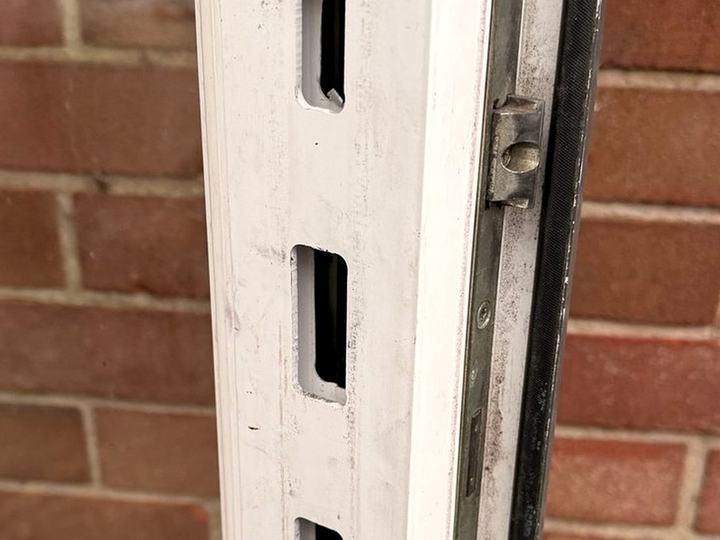
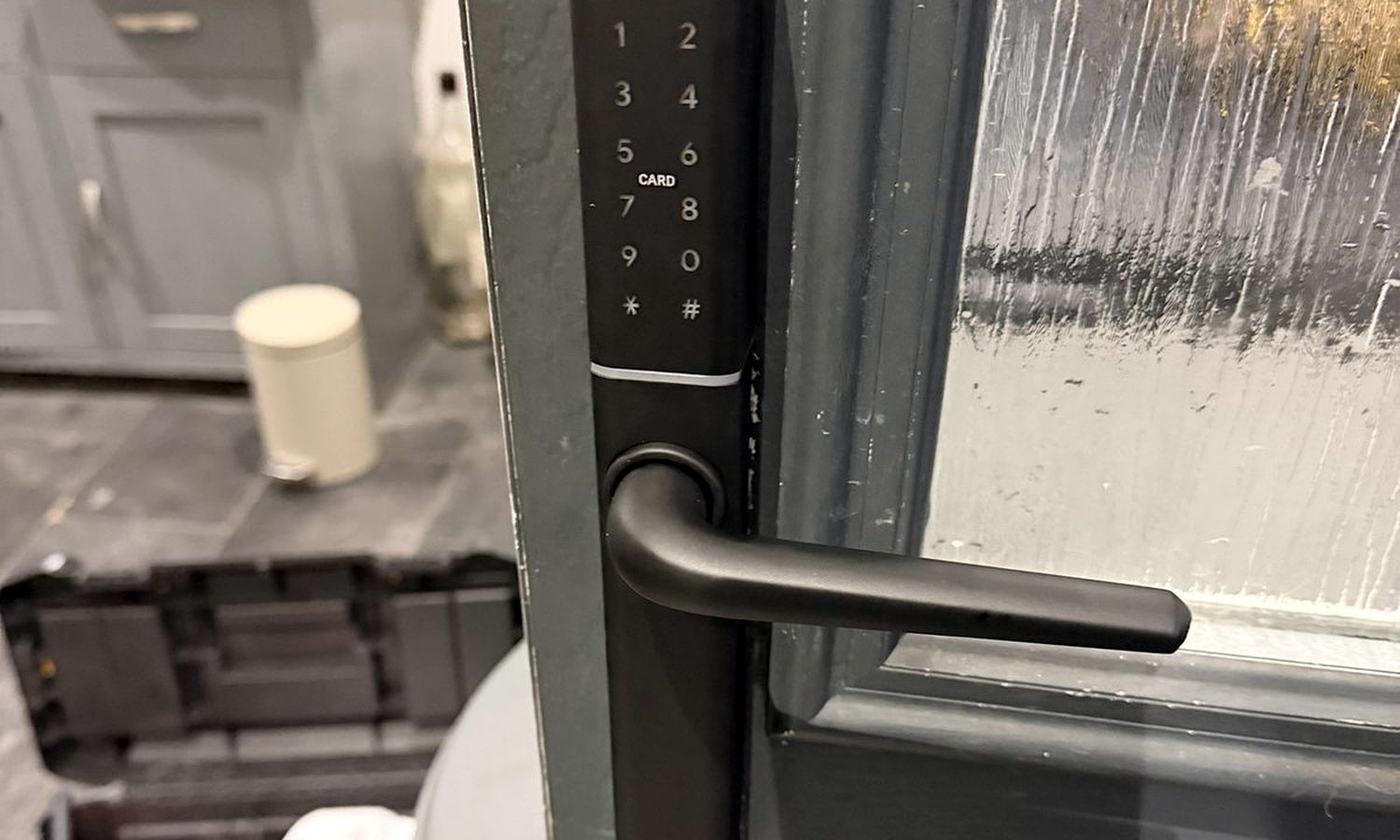
The door above is a good example of why. Its lift-up locking worked, but the latch — the sprung tongue that holds a door shut when you push it to — was missing, probably forced out when the door once jammed. The smart lock went on and works, but the door has to be lifted to lock every time, because nothing else holds it shut. That was the customer's choice, and a sensible one, but it is a property of the door, not the lock.
Before you buy, push the door shut without locking it and check it stays shut, then lift the handle and make sure it rises smoothly and the key turns afterwards. Our guide to fitting a smart lock to a faulty multipoint door covers what to do if it does not.
Where it is the wrong answer
If the door is still under a manufacturer's guarantee, check its terms first: some guarantees cover the door and its original hardware as a set, and changing the handles may affect that. And if the door has a smart or electronic lock from its maker already, fitting a second system over it rarely ends well — use or replace the one it came with.