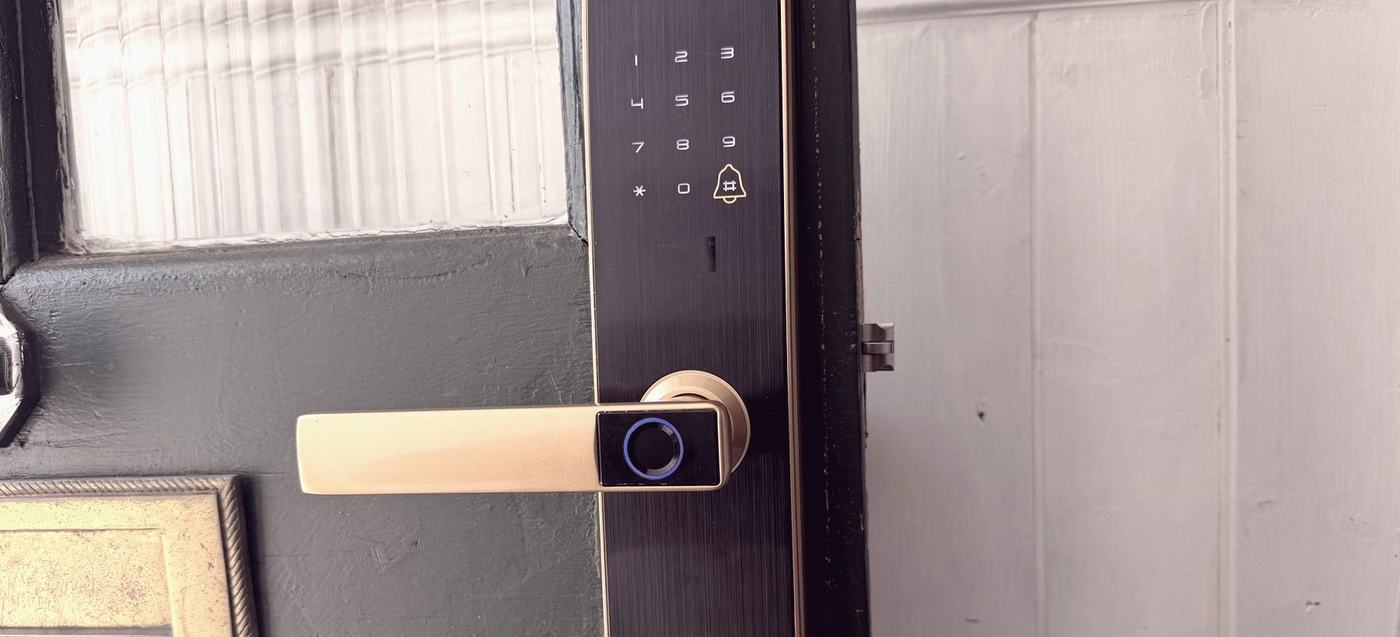
Walk into this market and you meet four words for what is largely one shelf of products. A digital door lock, an electronic door lock, a keyless entry system and a smart lock can, and often do, refer to the same unit — sometimes to the same unit sold by the same manufacturer under different names in different markets.
None of the four is a defined term. There is no standard that says a lock must do X to be called smart, and no body enforcing the distinction. They are marketing vocabulary that accumulated in layers as the technology changed, and the layers never got cleared away.
Where each word came from
Electronic is the oldest and the most literal: a lock with a circuit in it. It arrived with commercial and hotel hardware decades before any of this reached front doors, which is why it still sounds institutional to a British ear. Access control specifications still use it.
Digital came in with the keypad. It is the standard consumer term across much of Asia, the Middle East and southern Europe, where keypad locks reached ordinary homes far earlier than they did in the UK. Anyone who first met one abroad, or in a rental, will very often call it a digital door lock — and will search for it that way.
Keyless is a promise rather than a description. It says what has been removed. It is also the least reliable of the four, because the overwhelming majority of keyless locks ship with a mechanical key override, which is a feature rather than a contradiction.
Smart is the newest and the vaguest. It usually implies the lock talks to something — a phone, a hub, a booking system — but it is applied freely to locks that talk to nothing at all.
The only one of the four that reliably signals a capability is "smart", and even that one is applied to locks with no radio in them.
Does the distinction matter at all?
Slightly, and in one direction. If a product is described only as a digital or electronic lock, it is somewhat more likely to be a standalone keypad — codes entered at the door, no app, no remote anything. If it is described as smart, it is more likely to connect to something.
But this is a tendency, not a rule, and it is not one to buy on. We have seen locks marketed as smart that are keypad-only, and locks sold as digital door locks with a full app, remote unlocking and scheduled access. The label tells you which decade the manufacturer's marketing department is living in, not what the lock does.
The four questions that actually decide it
Ignore the name on the box and answer these instead. They separate products that genuinely differ, which the vocabulary does not.
At a glance
| How does it open? | PIN, fingerprint, card or fob, phone, mechanical key — and which combination. This is the single biggest practical difference between two locks that carry the same name. |
|---|---|
| Does it connect to anything? | Bluetooth only (phone must be at the door), Wi-Fi or a gateway (control from anywhere), or nothing at all. Decides whether you can issue access remotely. |
| How is it powered, and what happens when that fails? | Battery type and expected life, low-battery warnings, and the fallback: mechanical key, emergency USB power, or nothing. |
| What does it need from the door? | The mechanism inside your door decides what can physically fit, regardless of what the lock is called. This rules out more purchases than any other factor. |
Why the confusion persists
Partly because the category grew from two directions at once. Commercial access control came down into homes; consumer smart-home products went up into security. They met in the middle carrying different vocabularies, and nobody arbitrated.
Partly because the words serve a purpose for sellers. "Smart" reads modern; "digital" reads approachable to a buyer who is wary of anything involving an app; "keyless" sells the outcome rather than the mechanism. A manufacturer selling into several markets has every reason to use all three.
And partly because there is no reason for it to resolve. Nothing forces it. The words will go on meaning roughly the same thing for as long as they keep selling.
What to do with this
When you are searching, try all four. Retailers and installers index against different vocabulary, and a search for one term will genuinely miss products and suppliers that describe themselves with another.
When you are comparing, write the four questions above into a column and fill them in for each candidate. Two locks that look identical on a listing page frequently answer them differently, and no amount of reading the product name will surface that.
And when you are talking to an installer, describe what you want to happen rather than what you want fitted. "I want the cleaner to have a code that only works on Thursdays" is a specification. "I want a smart lock" is four different products.