
If you asked a hundred people in the UK to name a lock, most would say Yale, and a good number would say it without knowing they were naming a company at all. That recognition is doing a lot of work in this market, and it is worth separating what it earns from what it merely signals.
What it earns: Yale is part of ASSA ABLOY, a manufacturer at the top of the global lock industry. One organisation designs the product, makes it, certifies it and answers for it. That is the opposite of a platform model, where the software and the hardware come from different places and quality varies by whoever assembled the unit. If consistency is what you want, buying from a manufacturer rather than from an ecosystem is the reliable way to get it.
Two very different products under one name
The most common confusion we meet is people talking about ‘a Yale smart lock’ as though it were one thing. There are two architectures, and they suit different doors and different people.
Conexis is a full replacement. The existing handle set comes off the door and Yale's goes on, inside and out. You get a lock designed as a single object, which is why it looks and feels better than a retrofit bolted onto existing hardware.
Linus is a retrofit. It fits to the inside and turns the cylinder you already have, leaving the outside of your door — and your keyhole — exactly as it was.
If you have already read our piece on what resists force, you will recognise why that distinction matters more than the badge on the front.
The keyhole question
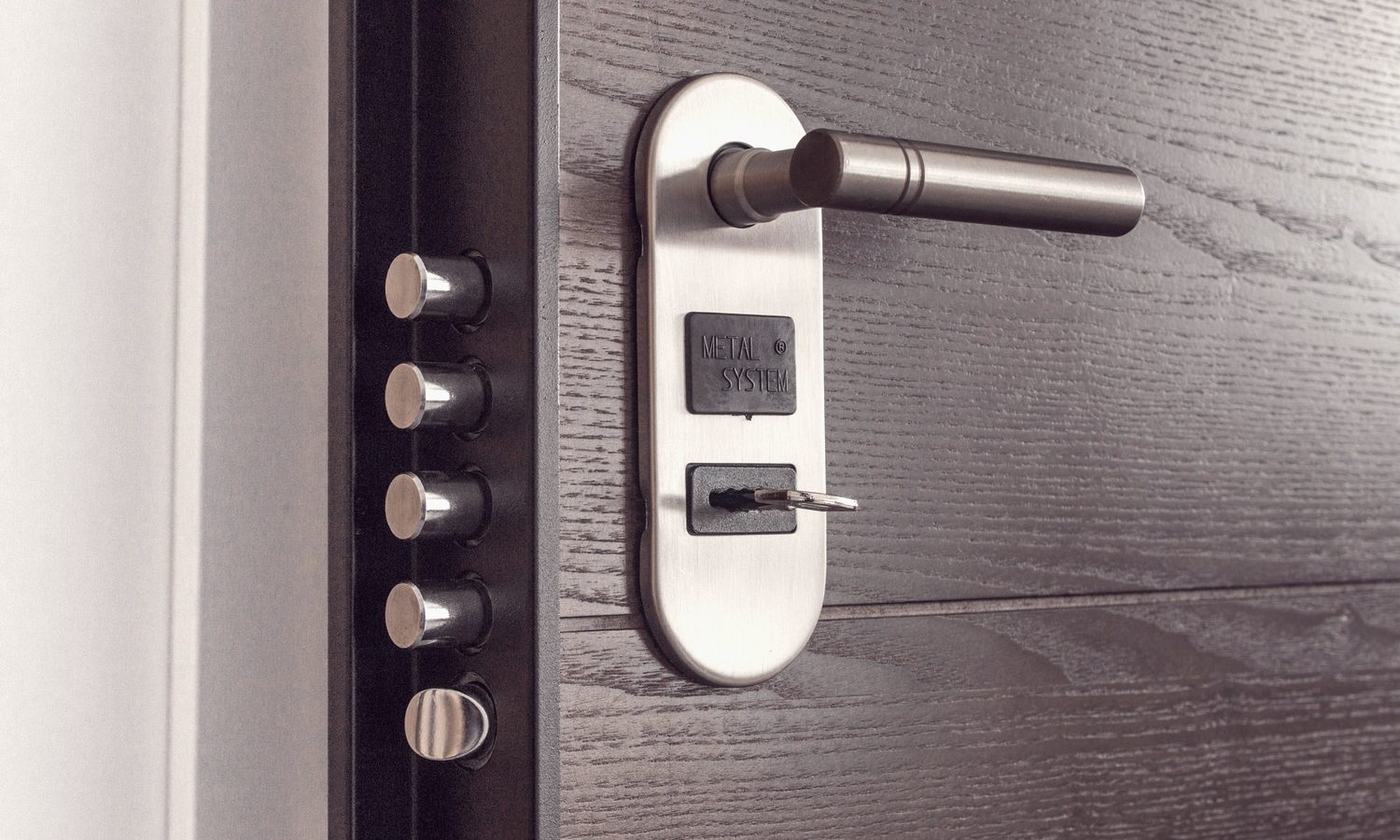
Conexis has no keyhole on the outside. None. The cylinder sits entirely within the door and there is nothing on the external face to pick, bump, drill or snap.
Taken purely as a security decision this is excellent, and it is more radical than it sounds. Almost every forced entry we have described elsewhere on this site starts at the cylinder. Remove the cylinder from the outside of the door and that entire family of attacks has nothing to work with.
Nothing to pick is the strongest possible answer to picking. It is also the strongest possible answer to you, standing outside with a flat battery.
The trade-off is the obvious one. There is no mechanical way in. Every route through that door is electronic, so the battery stops being a convenience question and becomes the only question. Yale have taken this seriously — the L2 provides external contacts so a 12V battery held against the outside will power the lock long enough to open it — and in practice the locks warn for a long time before they stop. But it is a household decision, not a technical one.
Our rule of thumb: households where somebody is not comfortable with a phone, or where an elderly relative or a child needs a way in that does not depend on anything having charge, are better served by a retrofit that keeps a mechanical key. Everyone else can take the security win. That is not a criticism of the design. It is a question about who opens the door.
What the certification actually says
Yale certify properly, and the marks are worth reading rather than skimming.
Conexis has been through PAS 24 attack testing and the TS007 3-star cylinder attack test — the same standards we point to elsewhere on this site, tested independently rather than claimed. The L2 additionally carries the BSI IoT Kitemark, which tests the electronic side: the security of the connected product itself, not just how hard the metal is to break. Very few lock makers hold that, and given how much of a smart lock's risk lives in software rather than in steel, it is arguably the more interesting of the two.
Where Yale is the wrong answer
The app. This is the consistent complaint, it has been for years, and we are not going to pretend otherwise. It works, and it is slower and clunkier than a product at this price ought to be. If managing access from your phone several times a day is the main reason you are buying a smart lock, try the app before you commit to the hardware.
Volume access management. A landlord with fifteen doors, or a holiday let with a code per booking, is asking for something Yale's consumer tooling is not built around. That is a different job and there are platforms that do it better.
Cost. You pay for the name and the certification, and both are real, but a competent retrofit on a cylinder you already own can deliver most of the benefit for less. Whether the premium is worth it depends on whether you value one company being answerable for the whole product — which is a reasonable thing to value.
Fiddly to fit. Reviewers say it and they are right. This matters less if somebody else is fitting it, but a Conexis installation is not a confident-DIY afternoon in the way the marketing suggests.
At a glance
| Who makes it | Yale, part of ASSA ABLOY — a manufacturer, not a platform |
|---|---|
| Conexis | Full replacement of the handle set; no external keyhole |
| Linus | Retrofit; keeps your existing outside hardware and key |
| Physical certification | PAS 24 and TS007 3-star cylinder attack testing |
| Electronic certification | BSI IoT Kitemark on the L2 |
| If the battery dies | Conexis: external 12V contacts on the L2. Linus: your key |
| Weakest point | The app |
Verdict
Best forHomeowners who want one recognisable company answerable for the whole product, and who are not managing access at volume
What works
- A manufacturer rather than a platform — consistent, supported, and still here in a decade
- PAS 24 and TS007 3-star testing done independently, not claimed
- The BSI IoT Kitemark on the L2 covers the electronics, which almost nobody else does
- Conexis removes the external cylinder entirely, which removes the most common forced-entry route
What doesn't
- The app is the weak link and has been for years
- Conexis has no mechanical way in — a household decision, not a technical one
- Not built around managing many doors or many short-term codes
- Costs more than an equivalent retrofit, and is fiddlier to fit than the marketing suggests
Where this assessment comes from
We fit these. That is the basis for the practical observations here — how they go on a door, what people ring us about afterwards, which households get on with which architecture. Certification details are from the published standards and Yale's own documentation, and the app criticism is both our experience and the settled view of every independent reviewer we can find. We have not bench-tested these locks against their competitors, and we do not pretend to have. See editorial standards.
How we assess Our views come from installing and configuring these locks on real doors, and from living with the apps and the admin side afterwards. We do not run laboratory security or durability tests, and we say so rather than implying a rigour we don't have. Read more on our editorial standards page.